
Lock Rekeying in Charlotte, NC
Rekeying changes the pins inside your existing lock so a brand-new key operates it — and every old key becomes useless. Same hardware, fresh start.
Call (980) 441-6084Free upfront quote on the phone · NC License #3198
What is rekeying, and is it better than changing the locks?
Rekeying changes which key opens a lock without replacing the lock. The cylinder comes out, the small pins inside are swapped for a different combination, and you get new keys cut to match — the hardware on your door stays where it is, and every old key stops working immediately. It is usually the right answer, because what you actually want to change is who has access, not the lock itself. Replacing hardware makes sense for different reasons: the lock is worn or damaged, it is a knob lock with no deadbolt behind it, or you want a higher security grade than what is fitted. Rekeying costs a fraction of new locksets and takes roughly ten to fifteen minutes per lock. Every exterior door can be keyed alike at the same time, so one key runs the whole house.
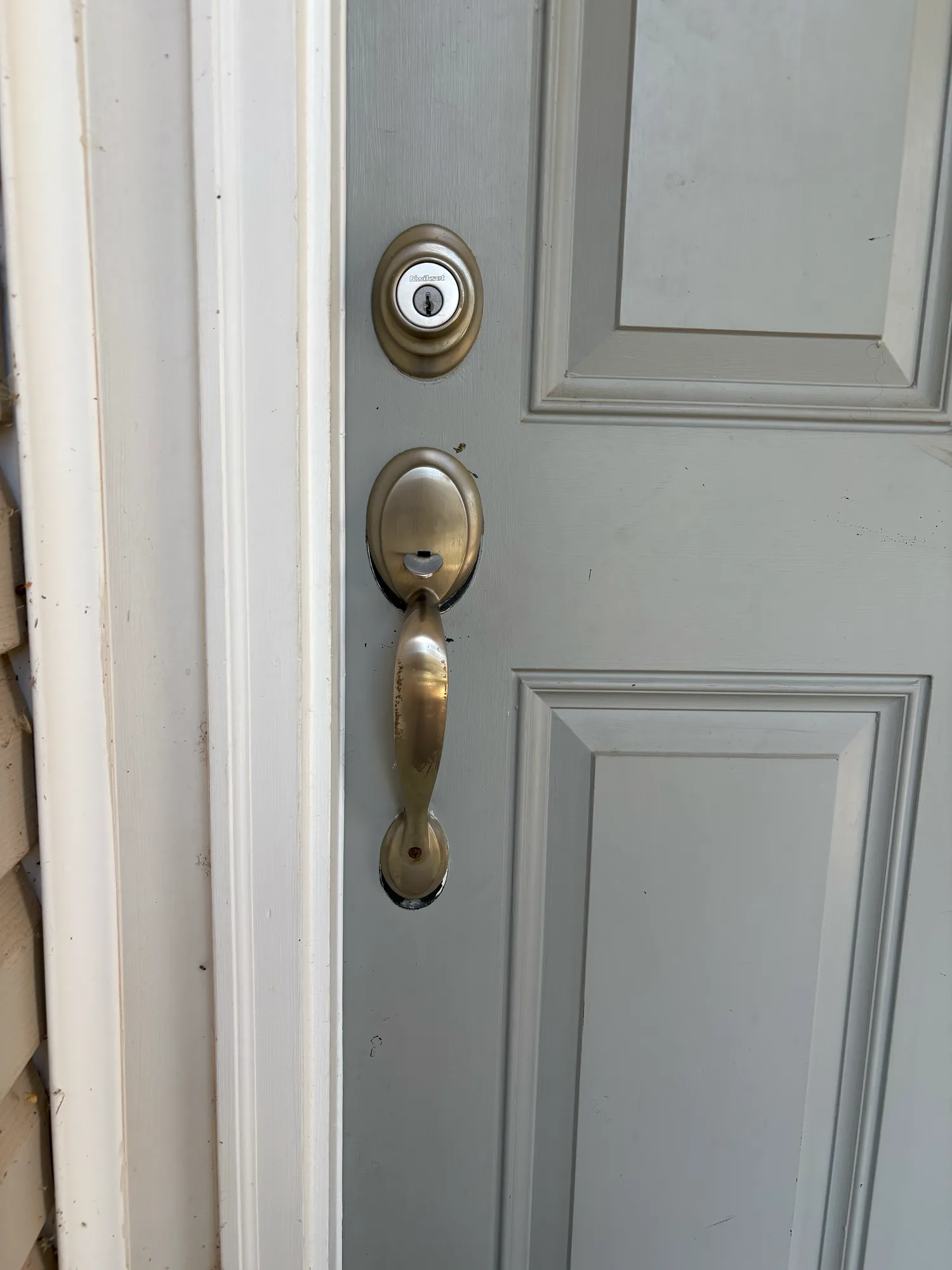
Rekey or replace? Usually rekey.
If your locks are in good shape and you simply don't know who else has a key, rekeying gives you all of the security benefit at a fraction of the cost of new hardware. Replacement makes sense when the lock is worn out, damaged, or you want to upgrade the grade or style. We'll tell you honestly which one your doors need — rekeying is usually the answer.
When rekeying is the right call
Just moved into a new home (the previous owners, their relatives and their contractors all had keys). Lost a key. A roommate or tenant moved out. A relationship ended badly. A contractor finished a project. Any time the set of people holding your keys has changed, a rekey resets it to exactly the people you choose.
One key for every door
If your locks share the same keyway (same brand family), we can rekey them all to a single key — front door, back door, garage entry door. No more fat keychain, no more guessing at the door in the dark.
Frequently Asked Questions
Is rekeying cheaper than changing locks?
Considerably, because you are paying for a small amount of skilled work rather than new hardware. Rekeying reuses the locks already on your doors: the cylinder comes out, the pins inside are changed to a new combination, and new keys are cut. Replacing a lock means buying the lockset as well, and on a house with four or five exterior doors that difference adds up quickly. The one thing rekeying does not do is improve the lock. If your deadbolt is worn, wobbling in the door, or is actually just a knob lock with no deadbolt behind it, then new hardware is the better spend rather than a cheaper reset of the same weak point. We will tell you which situation you are in once we look at the doors, and it is genuinely common to rekey three doors and replace one.
How long does it take?
Roughly ten to fifteen minutes per lock once the technician is at the door, so a typical house with three or four exterior locks is finished well inside an hour. The work is the same each time: remove the cylinder, change the pin stack, reassemble, then cut and test the new keys. What extends it is variety rather than quantity — a mix of brands across doors, a mortise lock that comes apart differently, or hardware untouched for decades that needs cleaning before it runs smoothly. If you want every door keyed alike, that adds no meaningful time; it is simply the same combination in each cylinder. Tell us how many doors there are and roughly what is on them when you call, and the quote you get will reflect the actual job rather than an average.
Can all my locks use the same key?
Usually, and it is the most common reason people rekey at all. Keying alike means every cylinder gets the same new combination, so a single key runs the front door, back door, side door and garage entry. The requirement is that the locks share a compatible keyway, which is the shape of the slot the key slides into. On a house where hardware has been added over the years brands are often mixed, and where one cylinder will not accept the shared key we either swap that cylinder or leave that door on its own key — we will tell you which when we look. There are also deliberate reasons not to key everything alike. If a cleaner or a dog walker needs the back door but not the rest of the house, we can set that up: one key for you that opens everything, another that opens only what that person needs.
Do I need to be home?
Someone with authority over the property does, and for a house that usually means you. The technician needs access to each door being rekeyed, and at the end somebody has to receive the new keys, which is not something we leave under a mat. It does not have to be you personally — a partner, an adult family member, or anyone you authorize can be there instead, as long as we know in advance. For a rental it is different: the person with authority is the owner or the management company rather than the tenant, so a rekey on a rented property is arranged through them. For a business it is the owner, an officer, or the property manager on record. That check exists to stop the obvious abuse, where someone locks a rightful occupant out of their own property.