Chevrolet Key Replacement in Charlotte, NC
GM PASS-Key, PASS-Key III and later transponder systems
Call (980) 441-6084Free upfront quote on the phone · NC License #3198
Can a locksmith replace a Chevy key on site?
Yes, for most Chevrolets, and the vehicle stays where it is. The thing that surprises people about GM vehicles is not the cutting or the programming but the waiting. Several generations of GM anti-theft require a security relearn that runs on the car's own clock — often around ten minutes, sometimes around thirty, occasionally repeated in cycles. Nothing is wrong when that happens; the vehicle is deliberately refusing to be rushed. It does mean a Chevy key can take longer at the roadside than the same job on another make, and an honest quote says so in advance. Give us the year, model and whether you have a working key, and we will tell you what to expect. Silverado, Equinox and Malibu are the three we see most often here, and they sit at quite different points on GM's key timeline depending on the year, so the year matters more than the model name.
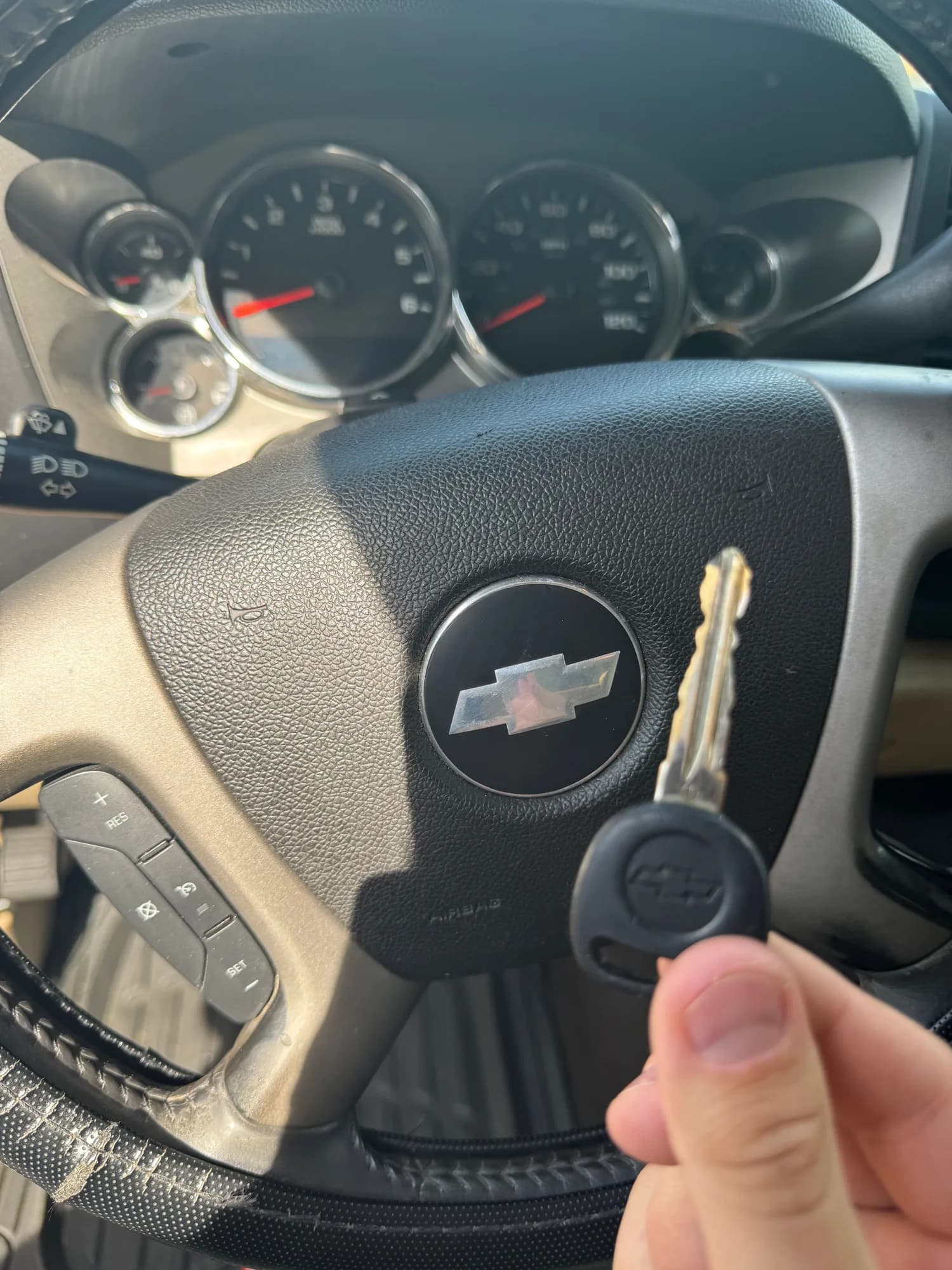
From resistor keys to proximity fobs
Older GM vehicles used a key with a small resistor pellet in the blade — the car read its resistance rather than a chip. Those give trouble when the pellet or the contacts wear, and the symptom is a car that starts sometimes. Later Chevrolets moved to a proper transponder, then to flip keys where the blade folds into the remote, and then to proximity fobs on push-to-start models. Silverado, Equinox and Malibu cover most of what we see in Charlotte, and each sits at a different point on that line depending on year.
Lost all Chevy keys
With nothing to copy, the key is generated from the vehicle and then taught to the anti-theft system, which is where the relearn timer usually appears. The job is done at the car and there is no reason to tow it. You will need photo ID and proof of ownership — the registration, title or an insurance card. If the car has been sitting for a while, mention it: a relearn that drains an already weak battery is the one avoidable complication in this job.
Chevrolet Key Questions
Why does programming a Chevy key take thirty minutes?
Because the car insists. Several generations of GM anti-theft include a security relearn procedure that runs on a fixed timer — commonly around ten minutes, sometimes around thirty, and on some vehicles repeated in cycles before the new key is accepted. It is a deliberate anti-theft feature: it makes the vehicle useless to someone who has only a few minutes to work with. Nothing can shorten it, by us or by a dealer. What we can do is tell you in advance so the wait is expected rather than alarming, and make sure the battery is healthy enough to sit through it, because a relearn interrupted by a dying battery has to start over from the beginning. If the car has been sitting for weeks, or the battery is already the original one, it is worth putting a charger on it before we arrive rather than discovering the problem twenty minutes into a timer.
My old Chevy key works sometimes and not others. What is that?
On older GM vehicles that is the classic symptom of a worn resistor key. Those keys carry a small pellet in the blade, and the car measures its resistance rather than reading a chip. Years of turning wear both the pellet and the contacts inside the lock cylinder, so the reading drifts in and out of range — the car starts on the third try, or on a warm day, or when you wiggle it. The fix depends on which side has worn. A fresh key solves it when the pellet is the problem; when the cylinder contacts are worn the key alone will not, and we will say so rather than selling you a key that changes nothing. The test is simple enough to describe: if a brand-new key behaves exactly like the old one, the fault was never in the key. That is worth establishing before money changes hands, not after.
Can you cut a Chevy key without the original?
Yes. With no key to copy, the blade is cut to the vehicle's own locks rather than duplicated, and the transponder is then programmed to the car. That is standard mobile work and the vehicle does not need to be towed anywhere. What we need from you is the year and model, whether it is a turn key or push-to-start, and proof the car is yours — photo ID plus the registration, title or an insurance card. Expect it to take longer than copying an existing key, both because of the cutting method and because GM relearn timers usually apply on an all-keys-lost job. Plan for the car to be occupied for a while rather than for a quick roadside stop, and park somewhere you are comfortable waiting if you have the choice of where it happens.
Related services
Need a Chevrolet key today?
Call with the year and model and you get an exact quote before anyone is dispatched.
Call (980) 441-6084