Moving into a home in Charlotte: the lock checklist
6 min read
KeyFix Locksmith LLC · NC License #3198
Should you change the locks when you move into a house?
Yes, and the reason is simpler than the usual advice makes it sound: nobody can tell you how many keys to that house exist. A property that has changed hands accumulates them across every owner — cleaners, dog walkers, contractors from two or three renovations, a neighbor who watered plants one summer, a previous owner's adult children. None of that appears at closing, and the seller genuinely will not remember all of it. What you want in almost every case is a rekey rather than new locks: the cylinders you already own are re-pinned to a new key, every old key stops working, and it costs a fraction of replacing hardware. Move-in week is the natural moment, because it is the one time you are already thinking about the house as a system.
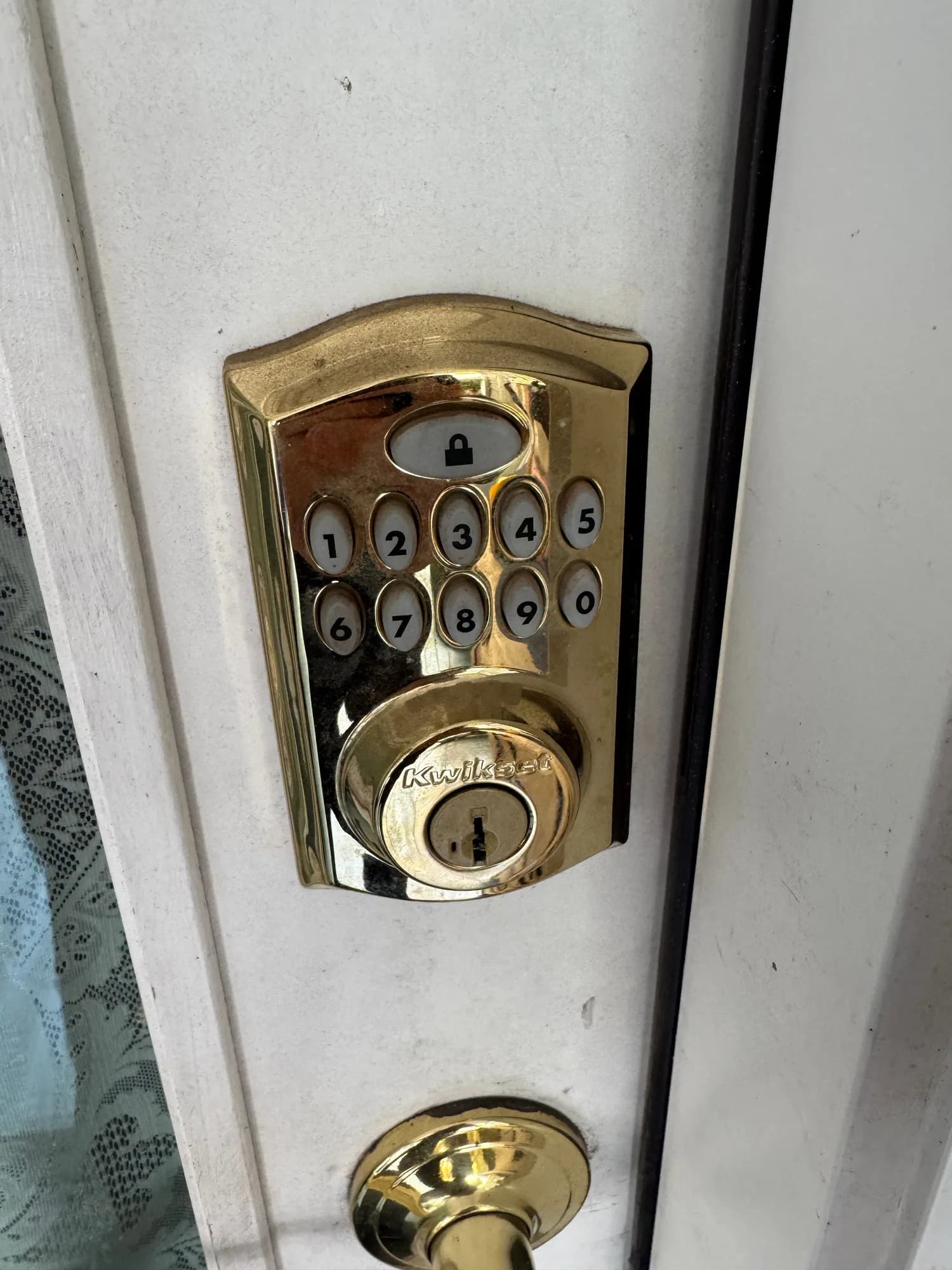
Rekey or replace?
Rekeying changes which key opens a lock without changing the lock. A locksmith takes out the cylinder, swaps the small pins inside for a different combination, and cuts keys to match. The hardware on your door stays exactly where it is, and the old keys stop working immediately.
Replacing makes sense for a different set of reasons, and they are about the lock rather than about who holds keys: the deadbolt is worn or wobbling, the door has only a knob lock with no deadbolt behind it, or you want a higher security grade than what is fitted. On a house with four or five exterior doors the cost difference is substantial, so it is worth knowing which problem you actually have.
In practice a lot of Charlotte move-ins end up as a mix — rekey three doors, replace one that was never any good. That is a normal outcome, not an upsell.
Make a list of every opening, not every door
The front door is the one everybody thinks of. The list that matters is longer: back door, side door, the door from the garage into the house, a basement entrance, a detached garage or workshop, a gate with its own lock, a shed. On older lots in neighborhoods like Plaza Midwood and Dilworth the outbuildings are frequently the weakest lock on the property, and a garage usually contains the tools someone would need for the house.
Walk it once with a notepad before you call anyone. The count and the rough type of each lock is what turns a vague quote into an accurate one.
One key, or several on purpose
Keying alike means every cylinder gets the same new combination, so a single key runs the front, back, side and garage. It is the most common request and usually the right one — a key ring with six house keys on it ends with people propping doors.
There is a deliberate alternative worth considering. If a cleaner, a dog walker or a contractor will need the back door or the garage but not the rest of the house, that can be built in: one key for you that opens everything, another that opens only what a particular person needs. It costs nothing extra to decide this at the same visit and is awkward to retrofit later.
The constraint is compatibility. Houses that have had hardware added over the years often carry a mix of brands, and where one cylinder will not accept the shared keyway it either gets swapped or stays on its own key.
New construction is a different problem
If you are moving into a newly built house — Steele Creek and the subdivisions out toward the lake see a lot of this — the question is not who the previous owner lent a key to. It is who had one during the build.
Builders handle this in three different ways and they are not equivalent. Some genuinely re-pin every cylinder at closing. Many use a construction-key system, where the same lock accepts a contractor key during the build and inserting the homeowner key for the first time mechanically retires it — which works, provided your key really was the first one used. And some hand over a key and change nothing. Ask your builder specifically which of the three they did; the answer tells you whether a rekey is a precaution or a necessity.
The five-minute upgrade nobody does
While someone is working on your doors, whether that is a rekey or a lock repair, have the strike plates looked at. The strike is the metal plate the bolt lands in, and on a great many houses it is held by short screws that bite into the door trim rather than the framing behind it.
That is where forced entries actually succeed. A determined kick splits the jamb; the lock itself is usually still bolted to the piece of wood that came away with it. Replacing the strike with a reinforced one and driving three-inch screws into the framing costs very little, takes a few minutes per door, and does more for the security of the house than most of what you could spend the same money on.
The order to do it in
Do the rekey on or immediately after closing day, before the house fills with your own contractors and helpers. Doing it afterwards means retiring a fresh set of keys you just handed out.
Do the garage and outbuildings in the same visit rather than a later one; a second call-out costs more than including them.
And if you are also changing a garage door code, a keypad or a smart lock, do those in the same week. The point of the exercise is closing every route at once, not one at a time.
Questions about your own locks or keys?
Describe the vehicle or the property on the phone and you get a price for your job before anyone is dispatched. NC License #3198.
Call (980) 441-6084Related questions
How long does it take to rekey a whole house?
Roughly ten to fifteen minutes per lock once the technician is at the door, so a typical house with three or four exterior locks is finished well inside an hour. The work is the same each time: remove the cylinder, change the pin stack, reassemble, then cut and test the new keys. What extends it is variety rather than quantity — a mix of brands across doors, a mortise lock that comes apart differently, or hardware that has not been touched in decades and needs cleaning before it runs smoothly. Asking for every door to be keyed alike adds no meaningful time, because it is simply the same combination in each cylinder. Tell us how many doors and roughly what is on them when you call, and the quote will reflect your actual house rather than an average one.
I am renting, not buying. Can I have the locks rekeyed?
Usually not on your own decision, and it is worth knowing that before a move-in weekend rather than during one. The locks belong to the property, so changing them is generally the owner's call. Check the lease: many allow a rekey with written permission provided you hand over a new key, some require the management company to arrange it, and a few forbid it outright. Ask the landlord or manager directly whether the unit was rekeyed after the previous tenant, because a great many are not, and the previous tenant's key opens your door. We work either way — with the property manager on their instruction, or with you once you have written approval — and for a landlord turning over several units at once it is far cheaper than it sounds.
Does a smart lock make rekeying unnecessary?
No, and this catches people out. Almost every smart lock has a mechanical key override — a keyway hidden under a cover or on the underside — because the alternative is being locked out when the batteries die. That physical key is a real key to your house, and if the lock came with the property, the codes you can see in the app are not the whole story. Delete the old user codes, which is the part people do remember. Then have the mechanical cylinder rekeyed, which is the part they forget. On a house with a mix of smart and traditional locks it is usually possible to key the override to the same physical key as the rest, so you carry one key rather than one plus an exception.